
1、 The development of electromyographic signals
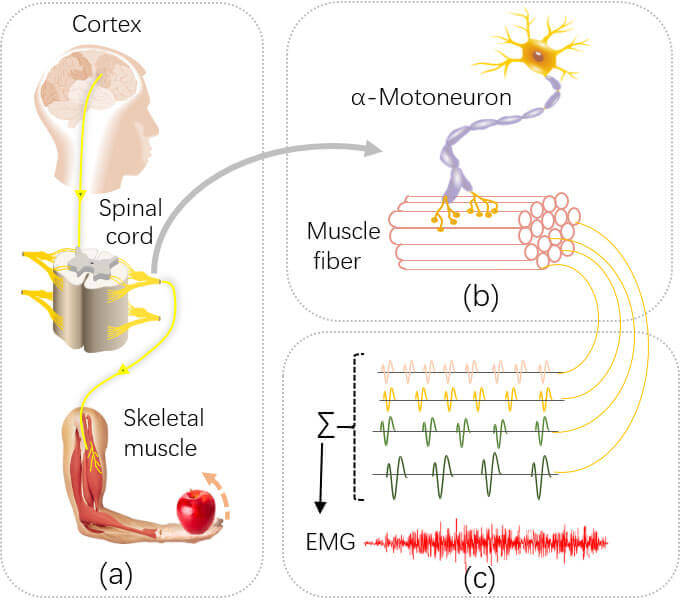
As the source of electrical signals that generate muscle activity, electromyographic signals essentially reflect the state of movement of the nervous, skeletal, and muscular systems. Since the first observation of muscle potential maps by humans in 1922, the research and application of electromyographic signals have a history of exactly one hundred years. Due to the close correlation between electromyographic signals and muscles as well as human movement, it has great potential for applications in sports, sports and rehabilitation medicine, neurorehabilitation engineering, and human-computer interaction. EMG engineering technology is an engineering technique aimed at solving the technical problems of EMG application in different fields, including EMG signal acquisition, processing, analysis, and application. It is widely believed in today’s academic community that electromyography engineering will become an equally important scientific and industrial technology field as the application of electroencephalography and electrocardiography.
2、 EMG acquisition and scientific application
EMG engineering technology has developed based on its signal acquisition method. It has gone through different stages of development, including needle electrodes, surface electrodes, wireless surface electrodes, high-density surface electrodes, and wireless high-density surface electrodes. In 1987, the FDA officially approved the clinical application of electromyography (EMG) electrodes, which became the gold standard for the diagnosis of many muscle related diseases in clinical practice. Needle electrodes can collect excitation signals from motor units (MU) due to their small needle tip and proximity to muscle fibers when inserted into the body. However, they have the disadvantage of causing harm to the human body.
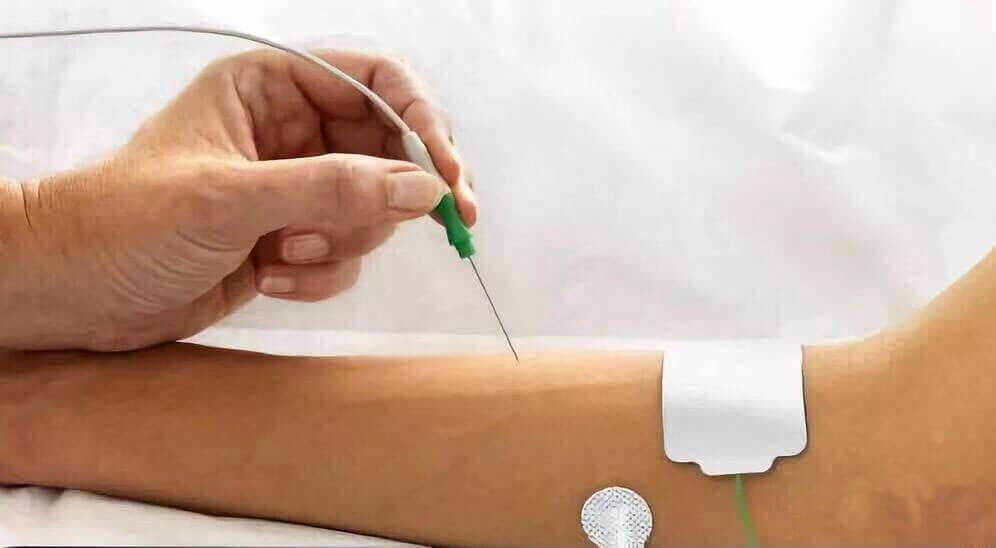
To address the drawback of needle electrodes, research has been underway since the 1990s to obtain electromyographic signals (sEMG) from the surface of human skin through electrode pads. In 2000, Delsys, an American company, was the first to launch wireless surface electromyography acquisition equipment, ushering in a new era of wireless surface electromyography acquisition technology. Surface electromyographic signals can directly reflect the real-time state of nerves and muscles during body movement (local body state, contribution rate and sequence of participation in movement, contraction speed and strength, fatigue level, analysis of exercise technology rationality, non-destructive prediction, etc.) by recording the electrophysiological activity of muscle tissue in the body. Due to its non-destructive characteristics, it has broad application prospects in human research, especially in the fields of muscle assessment, fatigue evaluation, and prosthetic control.
(1) In terms of sports technology
From the perspective of exercise training, muscle movement belongs to a technical problem, while from a physiological perspective, it belongs to a problem of coordination between muscles. Research has shown that sEMG signals can effectively assess whether muscles are involved in movement, the strength of movement, the duration of movement, and the coordination patterns between muscles. Quantitative studies can effectively demonstrate whether muscles play a primary or secondary role in a certain movement. This plays a crucial role in improving athletic skills.

(2) Regarding muscle fatigue
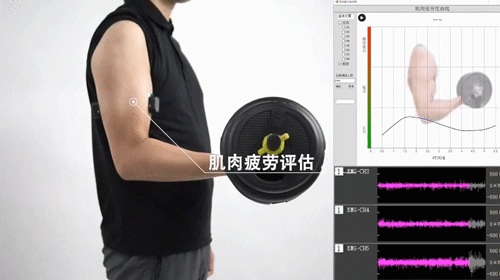
Surface electromyography signals can be used to study muscle injury lesions, muscle contraction speed, muscle coordination, and muscle fiber composition. SEMG signals undergo corresponding changes with the occurrence of exercise-induced muscle fatigue. Studies have shown that monitoring the movement of the biceps brachii muscle through linear and nonlinear analysis methods can investigate the changes in muscle surface electromyographic signal characteristics during local muscle fatigue and recovery induced by different intensities of isometric contractions. The results showed that with the development of local muscle fatigue, the randomness of sEMG signals decreased and the periodicity gradually increased. The changes in electromyographic signals AEMG, MPF, C (n), and% DET during fatigue showed regularity.
(3) In terms of prosthetic control
The technology barrier for lower limb prosthetics is relatively high compared to upper limb prosthetics, especially in terms of stability, safety, reliability, and other requirements, which only a few technologically advanced companies can achieve. In the past, lower limb prostheses mainly relied on mechanical structures to complete the daily movements required by people with disabilities, with certain limitations on walking speed and other factors. In order to adapt to different walking speeds and environmental changes, microprocessors were introduced into lower limb prostheses to improve the coordination between the prosthesis and the healthy limb, and users will gain the same balance retention ability as using their original limb. By using human physiological signals – surface electromyography signals as information sources, it is possible to overcome the wear and tear of ordinary sensors, and electromyography signals can more directly express human activity intentions. Many studies have shown that there is a certain relationship between lower limb electromyography signals and walking speed. Due to the inverse relationship between walking speed synchronization period under constant stride length, electromyography signals also affect the gait cycle of human walking to a certain extent.
3、 Domestic products also have world-class quality
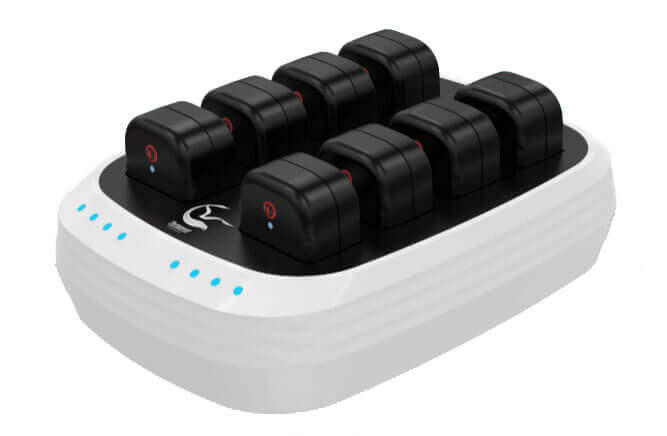
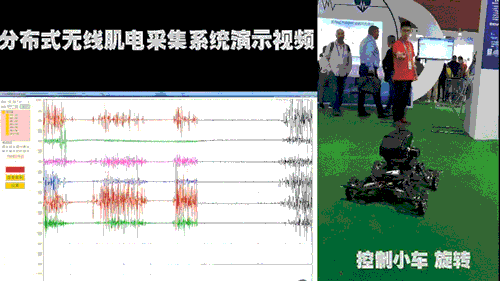
Foreign products have always dominated the application of surface electromyography (sEMG) signals, and after long-term development, they have comprehensively solved the amplification, acquisition, and analysis of raw electromyographic signals. In recent years, China’s electromyographic engineering technology has also made significant progress. At the 19th China International High tech Achievement Fair, Shenzhen Runyi Taiyi Technology Co., Ltd. launched the first distributed wireless electromyography product in China – the RunE-DS R0016 distributed wireless multi-channel electromyography acquisition system. The product system has ultra-low noise and extremely high common mode rejection ratio, and its software analysis and hardware acquisition have reached the international advanced level. Once launched, it caused a sensation in the industry and received widespread praise. CCTV Morning News also conducted a special report on this technology. The motion intention recognition system extended by this technology participated in the “Super Hero” exoskeleton challenge of the Army’s Military Equipment Department and won the first place in the national collaborative control subject.
(1) Regarding the distributed wireless multi-channel electromyography acquisition system
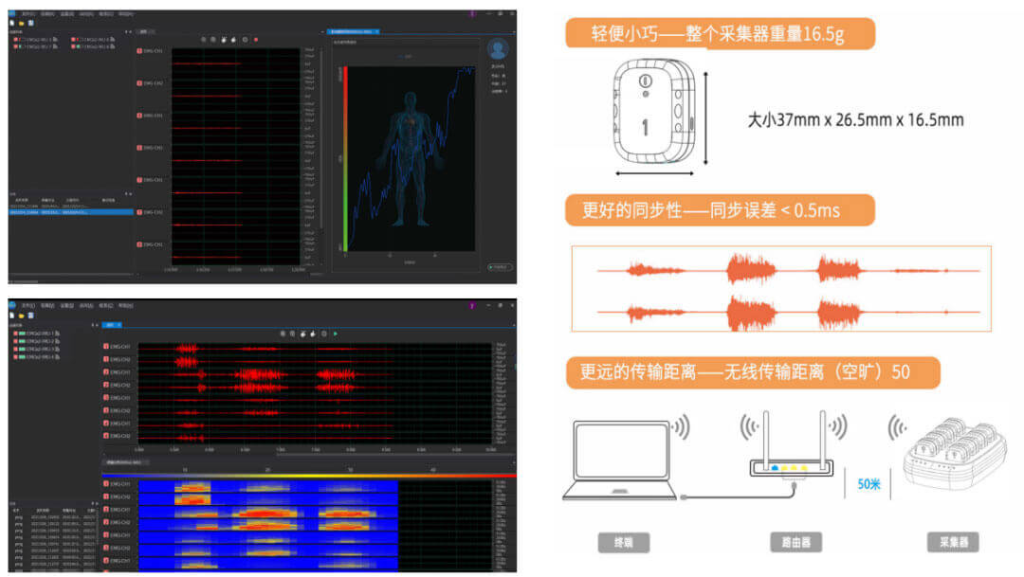
The distributed wireless multi-channel electromyography acquisition system independently developed by Runyi Taiyi is a simple and practical synchronous acquisition system for electromyography and inertial signals. The system has eight independent fully wireless collectors, each collector including two EMG channels, three-axis acceleration, angular velocity, and three-axis magnetometer; Equipped with RTWDSQ01 software, it can achieve synchronous acquisition of multiple collectors, real-time waveform display, real-time data storage, integration of multiple acquisition records into a single file, and export of multiple data format files. The RTWDSQ01 software provides an easy-to-use user data interface that can synchronize real-time collected data with users for sharing. The distributed wireless electromyography acquisition system has the characteristics of small size, portability, durability, and wireless control, and can be applied in various fields such as pattern recognition algorithm research, muscle fatigue assessment, and rehabilitation training.
(2) The cutting-edge level of domestic electromyography
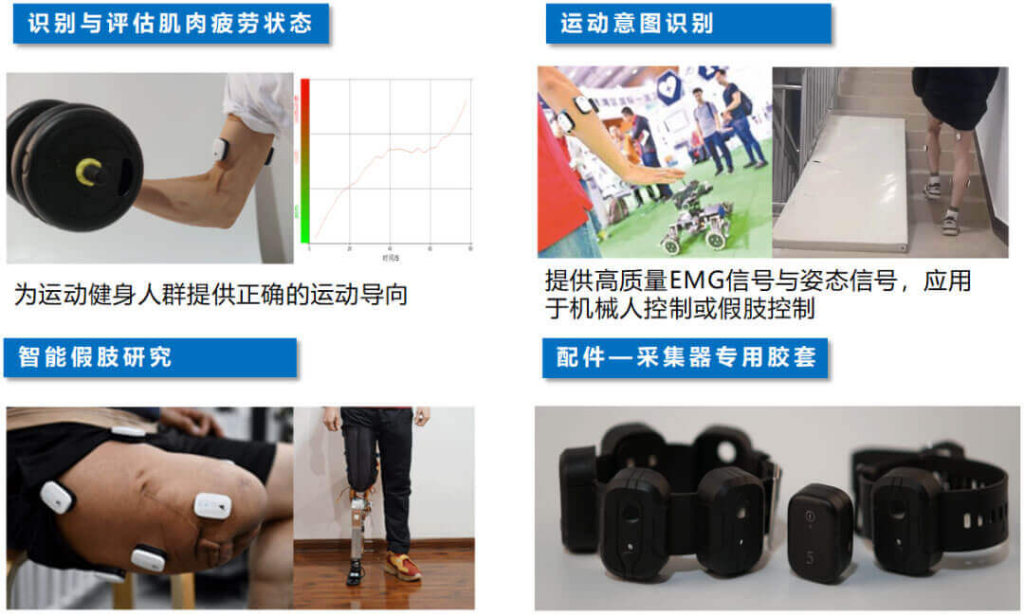
The Runyi Taiyi wireless multi-channel electromyography acquisition system adopts a distributed structure, which conforms to the muscle coordination hypothesis principle of human movement. It is possible to obtain maximum information about human muscles during movement within a limited number of channels. Combined with the nine axis gyroscope, it can be applied to more application scenarios, especially in hybrid control, which improves the accuracy of the system for motion tracking and capture, and takes into account both electromyography and inertial sensors as methods for obtaining motion information. Capture the motion of large joints with inertial sensors and fine hand movements with electromyography. This improves the accuracy and stability of action recognition in distributed systems, and reduces the cost of implementing action following.
Humanity has never stopped exploring on the road of technology, which has created infinite possibilities for humanity and completely changed our lives. The cutting-edge science and technology that have a significant impact on the development and progress of human society will also be a key factor in promoting the development of new industries. The development of science and technology can enable humanity to overcome one survival obstacle after another, create increasingly better conditions, expand into broader fields, and gain more opportunities for survival. Runyi Taiyi focuses on the advancement of electromyographic engineering technology and will never stop on the road of applying electromyographic engineering technology to benefit humanity.