
From August 29 to 30, 2025, the first “AI + Sports Health” Symposium, hosted by Guilin University of Electronic Technology and co-organized by Guangdong Provincial Hospital of Traditional Chinese Medicine, Guilin Economic and Technological Development Zone Management Committee, and Guilin Runyitaiyi Technology Co., Ltd., was successfully held at the Hongmou Grand Hotel and Guihai Qinglan Conference Center in Guilin.
This conference brought together top experts, scholars, medical institution representatives, and industry professionals from across the country to jointly explore the innovative applications and development pathways of artificial intelligence in the fields of sports health and rehabilitation.
I. Opening Remarks: Tripartite Collaboration to Drive Industry Development
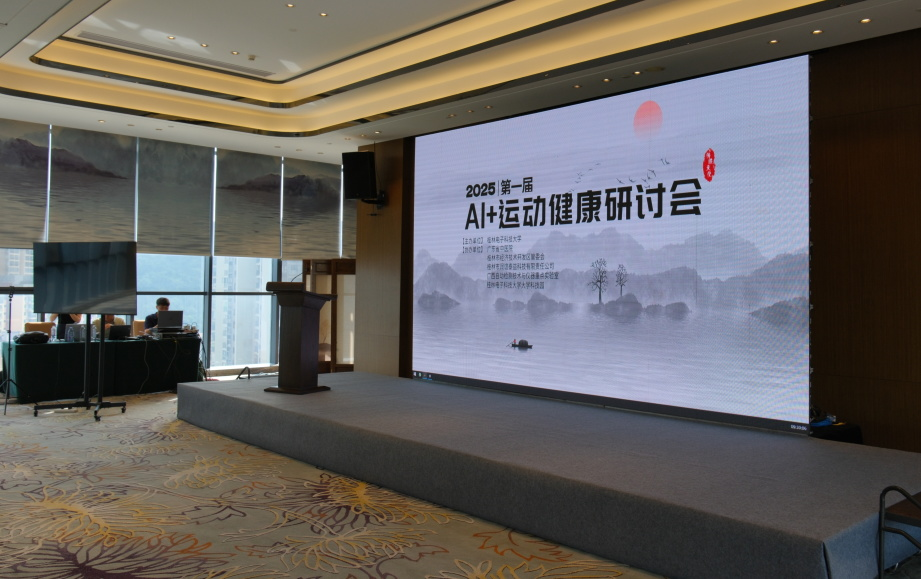
At the opening ceremony, Professor Zhou Ya, Vice President of Guilin University of Electronic Science and Technology, Sun Yingying, Deputy Secretary General of Guilin Municipal People’s Government, and Professor Lin Dingkun, Dean of the Orthopedics Department of Guangdong Provincial Hospital of Traditional Chinese Medicine, delivered welcoming speeches to kick off the seminar.
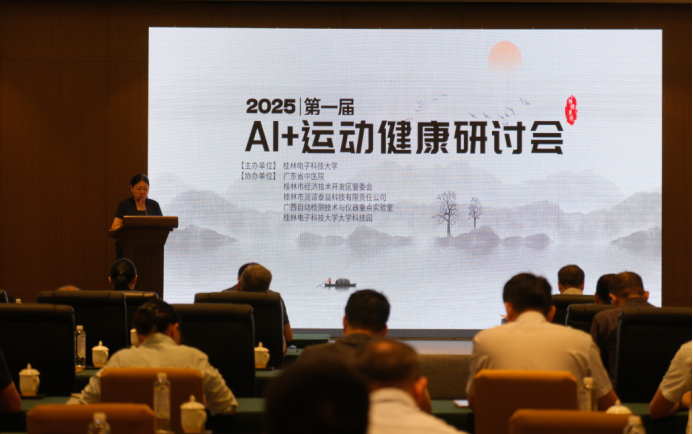
Professor Zhou Ya, Vice President of Guilin University of Electronic Science and Technology, stated in her speech that Guilin University of Electronic Science and Technology has always adhered to the development concept of deep integration of industry, academia, research and application. The school will fully leverage its technological advantages in areas such as artificial intelligence and electronic information, work closely with experts in the medical and health fields, and jointly promote the innovative application of AI technology in the field of sports and health.
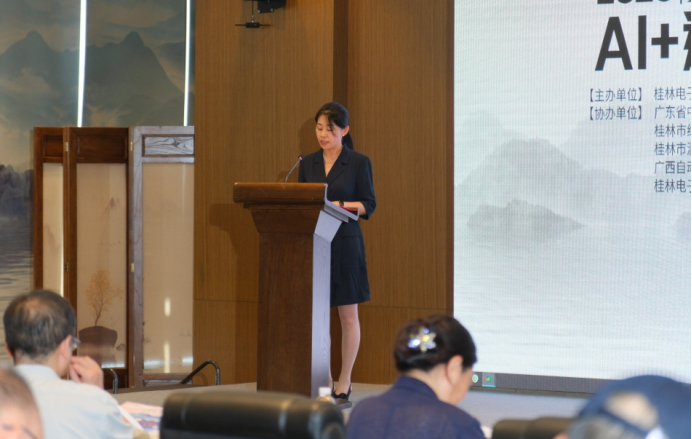
Sun Yingying, Deputy Secretary General of Guilin Municipal People’s Government, pointed out in her speech that Guilin attaches great importance to the development of the big health industry and actively promotes the deep integration of cutting-edge technologies such as artificial intelligence with traditional medical and health care. This seminar is an important measure for Guilin to build a ‘Healthy Guilin’, and we hope that the attending experts can provide suggestions and recommendations for the development of Guilin’s overall health industry.
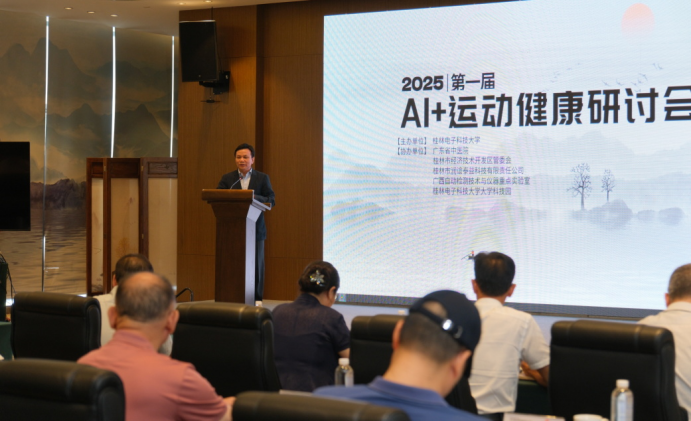
Professor Lin Dingkun, President of the Orthopedics and Traumatology Department of Guangdong Provincial Hospital of Traditional Chinese Medicine, emphasized in his speech that “artificial intelligence is reshaping the future pattern of the medical and health field. Through the empowerment of AI technology, we can provide patients with more accurate and personalized rehabilitation plans, which is an important direction for the development of medical technology.
2、 Focusing on the forefront of rehabilitation, discussing the new trends of AI+sports health together
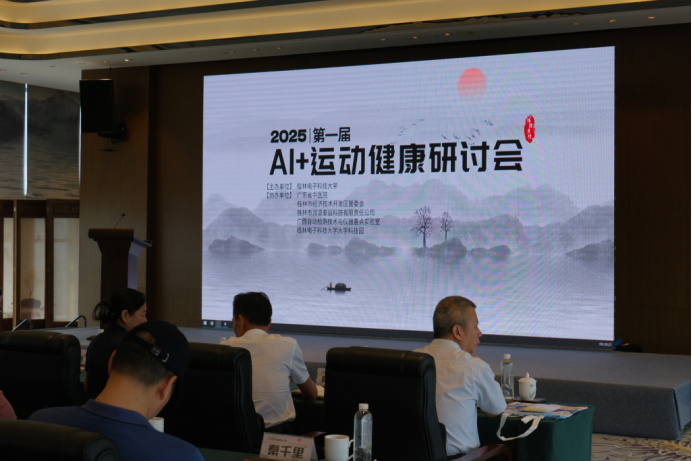
The conference, with the theme of “AI+innovation driven, promoting high-quality development of sports and health”, conducted in-depth exchanges on hot topics such as artificial intelligence in sports dysfunction assessment, intelligent wearable devices, digital therapy, and personalized exercise prescription systems. Several authoritative experts bring wonderful reports:
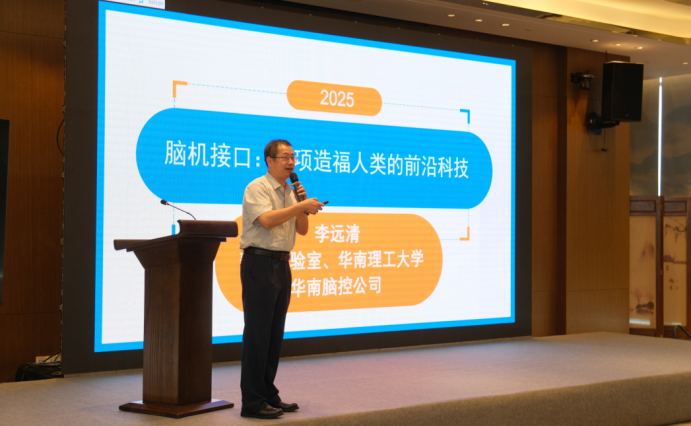
Professor Li Yuanqing (South China University of Technology) shared “Brain Computer Interface: A Frontier Technology for the Benefit of Humanity”. He introduced the development process, core technological breakthroughs, and innovative applications of brain computer interface technology in the field of motor function rehabilitation from the perspective of biomedical engineering, providing a new rehabilitation training method for patients with motor dysfunction.
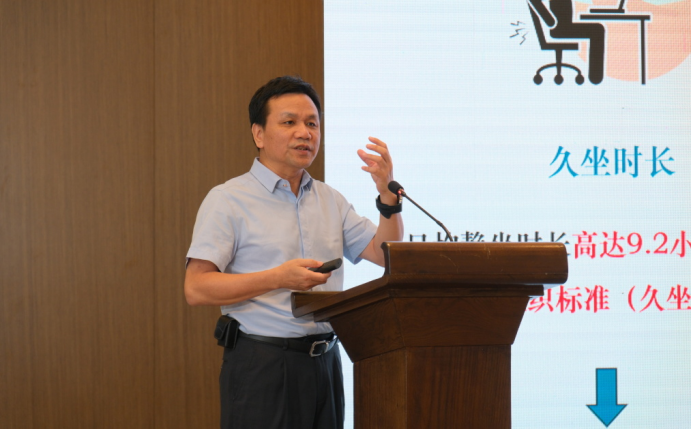
Professor Lin Dingkun (Guangdong Provincial Hospital of Traditional Chinese Medicine) proposed an integrated health management plan of “prevention, treatment, and care” for sedentary people in his report “Exercise and Health of Sedentary People”, and combined with traditional Chinese medicine theory to explain how to prevent and improve chronic strain related diseases such as cervical and lumbar spine through scientific exercise.
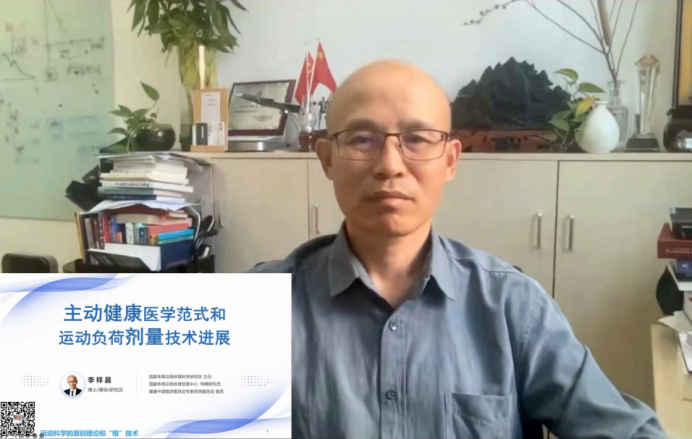
Director Li Xiangchen (General Administration of Sport of China) elaborated on “Active Health: A New Paradigm of Medical Model” and pointed out that artificial intelligence technology is driving the transformation of health management from “passive medical care” to “active health”. He introduced a personalized exercise prescription system based on big data and AI technology, which helps people establish a healthy lifestyle through scientific monitoring and evaluation.
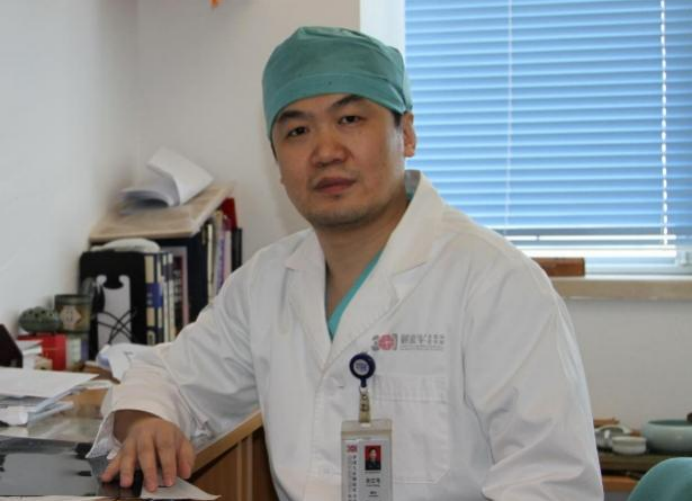
Director Zhang Lihai (General Hospital of the People’s Liberation Army) shared the latest achievements in the interdisciplinary integration of medical and engineering disciplines in the report “Medical Engineering Integration and Micro Robots”. He emphasized the application of miniature surgical robots in precision orthopedic treatment, as well as how to improve surgical accuracy and rehabilitation effects through AI technology.
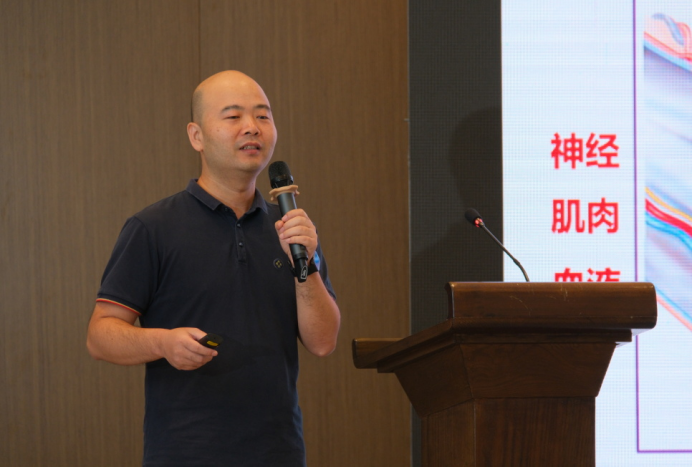
Dr. Wang Hui (Shenzhen Advanced Institute of Chinese Academy of Sciences) reported on “Research on Human Motion Information Detection and Motion Quality Evaluation” and introduced a multimodal motion information acquisition and analysis system. This system uses computer vision and sensor technology to accurately evaluate the quality of movements during exercise, providing quantitative basis for rehabilitation training.
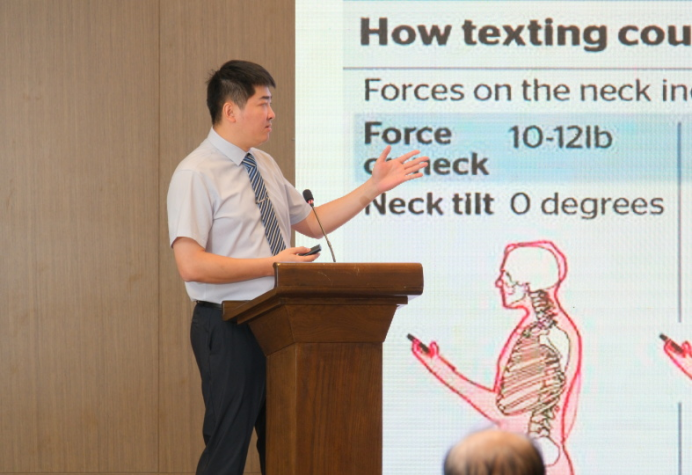
Dr. Hou Yu (Guangdong Provincial Hospital of Traditional Chinese Medicine) systematically elaborated on the formulation of exercise plans for cervical spondylosis patients in a special report, revealing the core value of scientific exercise intervention in the comprehensive treatment of cervical spondylosis through clinical empirical research, and providing quantifiable operational norms for clinical practice.
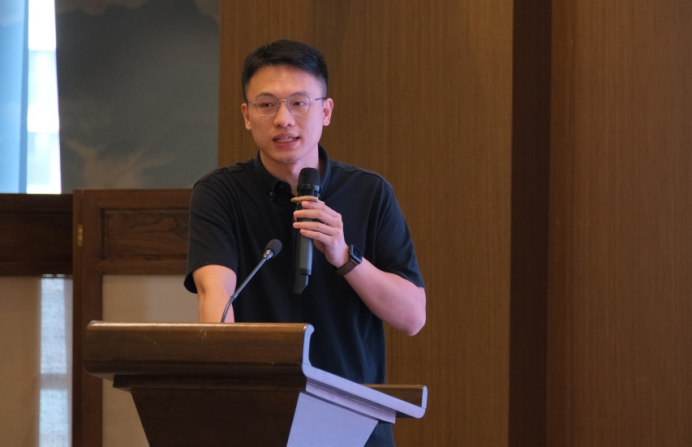
Dr. Xiao Haolin (Guilin University of Electronic Science and Technology) introduced “Non invasive Sweat Detection Technology and Its Application Research”, which provides new ideas for sports health monitoring by detecting biomarkers in sweat to evaluate human movement status and health level in real time.
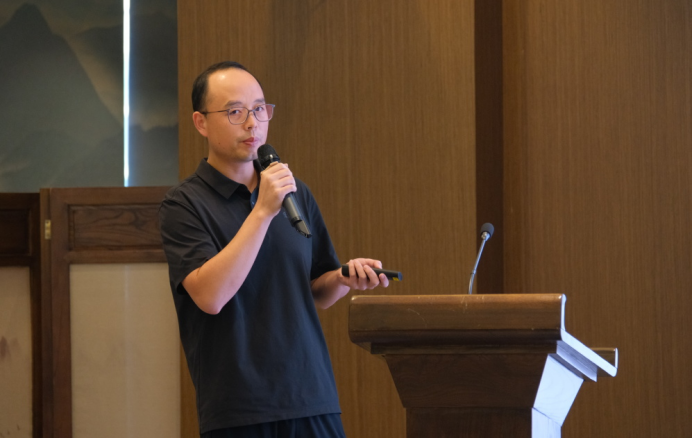
Dr. Wu Ji (Sichuan Orthopedic Hospital) shared in the report “AI+Exercise Prescription Driving the Integration of Sports and Medicine” how to develop personalized exercise prescriptions for elderly patients through artificial intelligence technology. He combined clinical cases to demonstrate the innovative application of AI technology in the rehabilitation of elderly bone and joint diseases.
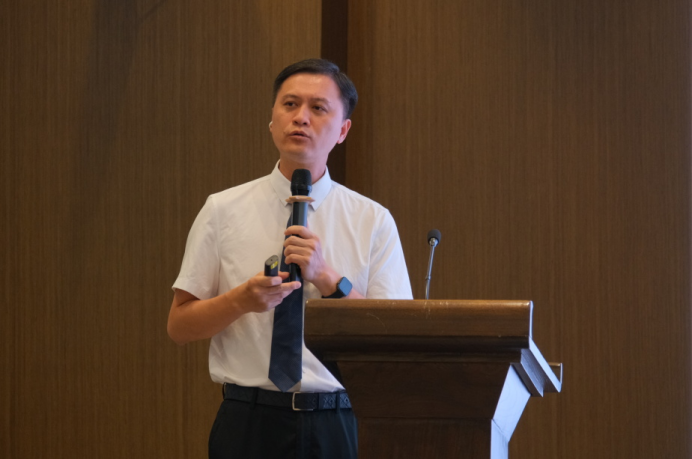
Professor Li Yongjin (Guangdong Provincial Hospital of Traditional Chinese Medicine) analyzed the “Research on Biomechanics based Intervention and Postoperative Rehabilitation of Lumbar Vertebral Diseases” from a biomechanical perspective and introduced the clinical application effects of characteristic rehabilitation techniques such as forward bending and rolling of the waist and supine soaring and straight leg kicking.
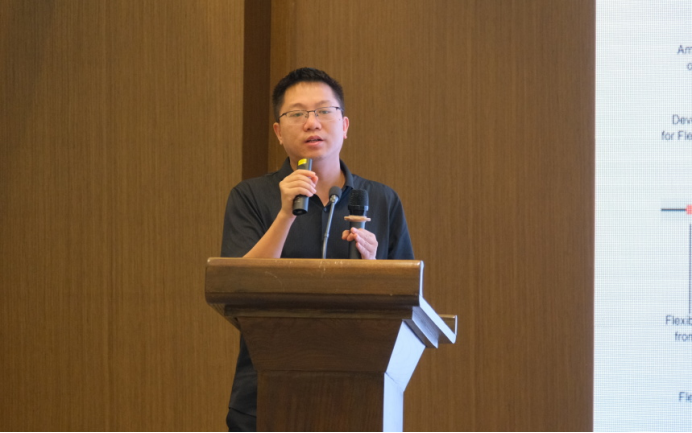
Professor Pan Liang (University of Electronic Science and Technology of China) presented “Flexible Electronics and Its Application in EMG prosthetic control”, showcasing the latest developments in flexible electronics technology. He emphasized the innovative application of high-sensitivity flexible sensors in electromyographic signal acquisition and prosthetic control, providing new technological solutions for the rehabilitation of disabled individuals.
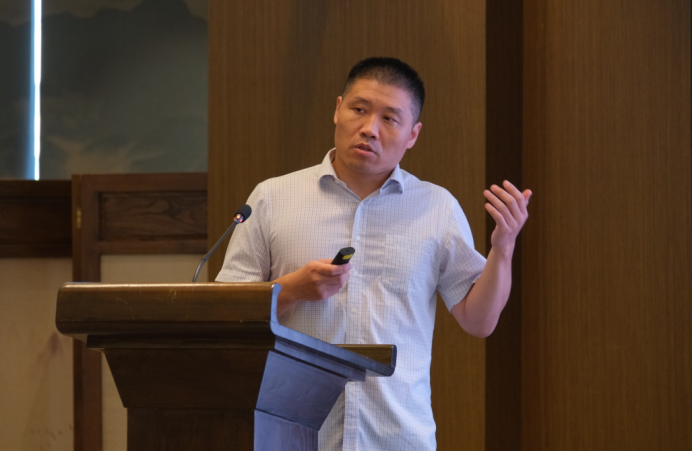
Professor Huang Pinggao (Guilin University of Electronic Science and Technology) shared his research on key technologies and applications of wearable physiological signal acquisition and showcased his team’s breakthrough achievements in this field. The multimodal physiological signal acquisition system they developed can monitor multiple physiological indicators in real-time during exercise, providing solid data support for health management.
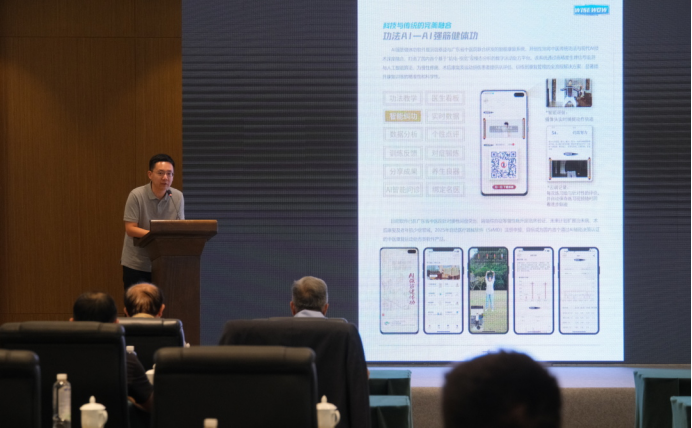
Mr. Gao Chao (Chairman of Runyi Taiyi) demonstrated the “AI Strong Muscle Fitness Skill” intelligent rehabilitation system on site. The system combines traditional Chinese medicine techniques with modern AI technology, and achieves precise evaluation and real-time correction of movements through electromyography visual bimodal analysis, providing innovative solutions for sports rehabilitation.
3、 Product experience and integration of industry, academia and research demonstrate innovative strength
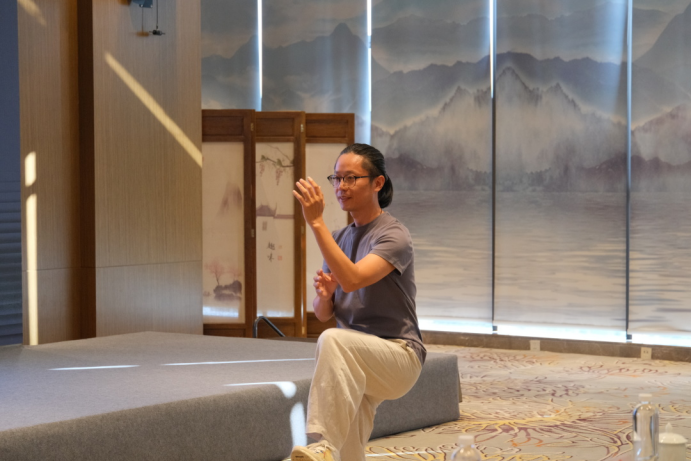
During the conference, Runyi Taiyi Technology showcased its “AI Strong Muscle Fitness” intelligent rehabilitation system jointly developed with Guangdong Provincial Hospital of Traditional Chinese Medicine.
This system provides a full process solution from assessment, training to rehabilitation management for patients with chronic pain, postoperative rehabilitation, and sports injuries through high-precision physiological signal monitoring and artificial intelligence algorithms.
Experts highly praise the innovation and practicality of the system, believing that this product, which integrates traditional Chinese medicine techniques with modern AI technology, represents the future development direction of the sports and health field.
The intelligent rehabilitation system has the following core functions:
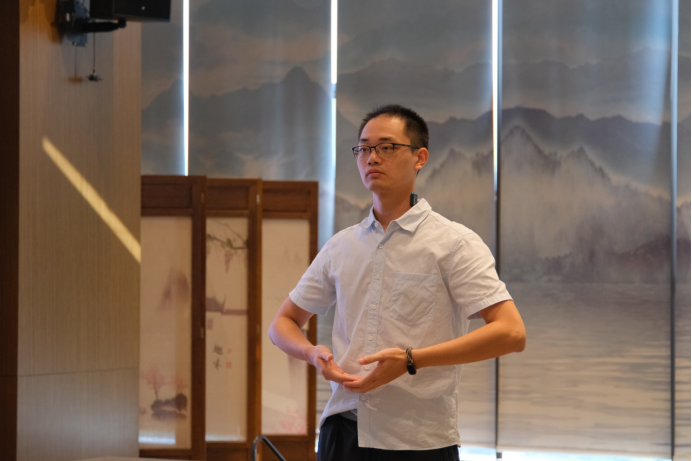
(1) Intelligent motion capture and multimodal evaluation
Using wireless electromyography devices to synchronously collect multi-channel muscle activity data, combined with visual technology to achieve motion posture reconstruction and accurately identify abnormal force states.
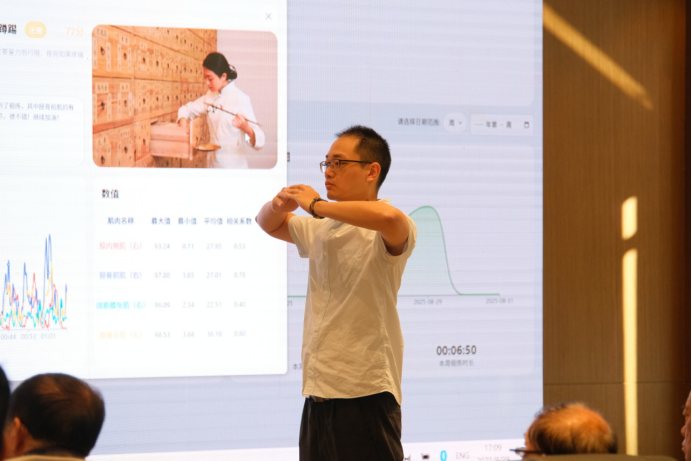
(2) Real time AI correction
The camera captures the user’s motion trajectory and compares it with a standard model for intelligent scoring. Combined with electromyographic data, it generates visual curves to achieve multimodal feedback.
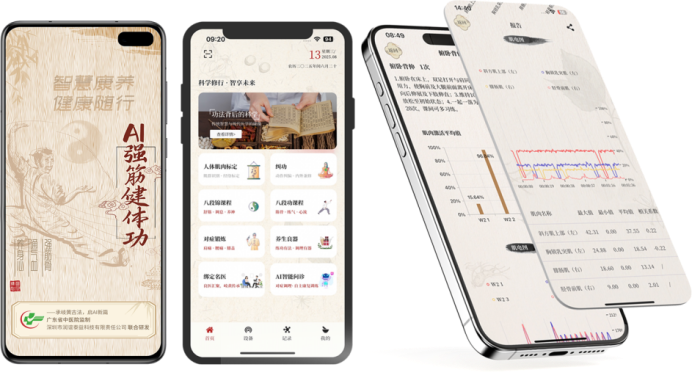
(3) Intelligent Health Management
Automatically generate weekly/monthly reports (including completion rate and pain index trends), share them with doctors or family members with just one click, and enable electronic exercise prescription issuance and dynamic evaluation and adjustment.
This seminar is not only an academic feast, but also a deep collision between industry and clinical practice. Through interdisciplinary and cross disciplinary communication and cooperation, the innovative application and landing transformation of AI technology in the field of sports and health have been promoted, injecting new momentum into the development of intelligent rehabilitation in China.
In the future, all parties will continue to strengthen cooperation and jointly promote the construction of the “AI+Sports Health” ecosystem, helping to implement the “Healthy China” strategy.